















Puffy Cat







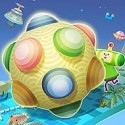






Every level in Puffy Cat starts the exact same way: a round, squishy cat balanced somewhere it clearly shouldn’t be, a scattering of balloons it needs to reach, and a small handful of platforms standing between the two. Nothing moves until you click something. That stillness before the first tap is where most of the actual thinking in Puffy Cat happens.
| Genre | Physics Puzzle |
| Platform | Browser, Mobile |
| Controls | Single click or tap to remove obstacles |
| Objective | Pop every balloon in a level using the fewest removals possible |
One Click, One Puzzle: The Core Idea Behind Puffy Cat
Every stage in Puffy Cat presents the same basic question — which platform, if removed at the right instant, sends the cat bouncing toward every balloon on the screen? The cat itself behaves like a soft, elastic ball rather than a rigid character, squishing on impact and rolling through narrow gaps that a stiffer sprite never could. That elasticity is the whole game — remove the wrong support and the cat rolls harmlessly off-screen; remove the right one and it caroms through three balloons in a row.
The controls stay identical from the first level to the last: click or tap to remove an obstacle. What changes is how many moving pieces are stacked on top of each other before that one click actually triggers a chain reaction worth watching.
Nothing about the interface ever gets more complicated than that single click, which is part of why the game reads as relaxing even when a particular layout takes several attempts to crack.
Bumpers, Springs, and Slopes: Reading the Physics
Later stages layer in bumpers, springs, and angled slopes, and each one redirects the cat’s momentum differently. A bumper adds a sudden burst of speed in whatever direction the cat hits it from, while a spring launches it almost straight up, and a slope just quietly changes the angle of a fall into a controlled roll. Reading how these elements interact before making a move is the entire skill of the game, since a single misjudged bounce off a spring can send the cat flying clean past a balloon it was supposed to land on.
Casual players tend to click the first available platform and hope for the best, while more methodical players trace the likely path all the way through before committing to a single tap.
What New Players Get Wrong About Puffy Cat’s Timing
The most common beginner mistake is removing a platform the instant it looks safe to do so, without accounting for the cat’s current speed. Momentum carries over between bounces in Puffy Cat, meaning a cat that’s already moving fast from an earlier drop will overshoot a landing spot that would have worked perfectly if the cat had been moving slower. Waiting an extra half-second before clicking is often the difference between a clean multi-balloon chain and a wasted attempt.
Some levels only look solvable in one order, but there’s frequently a second, less obvious solution that clears the stage with fewer clicks — something completionist players chase once they’ve cleared the main balloon count.
This is exactly why the game keeps a click count visible at all.
Multi-Balloon Chains and Why They Matter in Puffy Cat
Popping a single balloon per removal is enough to clear most early levels, but the more satisfying solutions chain two or three balloons off one triggered drop. Building toward a chain usually means leaving a platform in place slightly longer than instinct suggests, letting the cat pick up enough speed off an earlier bounce to carry it through the next balloon without a second click.
- Identify which balloons sit along a natural fall line before removing anything
- Hold off on obvious first clicks that would only net a single balloon
- Watch for slopes that can redirect a fall into a second balloon cluster
Players chasing a clean run on a level they’ve already beaten almost always come back specifically to find one of these chains.
Skins, Progress, and What Actually Carries Between Levels
Clearing levels unlocks new skins and color variations for the cat, and while these changes are purely cosmetic, they give longer play sessions a small sense of forward motion beyond just the next stage unlocking. Nothing about a skin changes how the cat bounces or reacts to a bumper, so players picking one purely for looks aren’t giving anything up in terms of difficulty.
Why Puffy Cat Stays Relaxing Even When a Level Is Hard
Because failure just resets the level instantly with no penalty, Puffy Cat never punishes experimentation the way a lives-based puzzle game would. A wrong guess costs a few seconds, not progress, which is part of why players describe even a stubborn stage as satisfying to retry rather than frustrating. That said, a handful of later levels do hide the correct platform in a spot that isn’t obvious at a glance, and that’s where the divide between casual players and puzzle-focused players shows up most — some enjoy hunting for it, others reach for a hint immediately.
Is there a time limit on any level in Puffy Cat?
No — levels are untimed, so there’s no pressure to solve a layout quickly, and retrying a failed attempt costs nothing but a few seconds before the level resets.
Do the unlockable skins affect how the cat moves or bounces?
They don’t — skins and color variants are purely cosmetic rewards for progress, so choosing one for looks rather than gameplay has no effect on how a level plays out.
Puffy Cat never needs more than a single input to stay interesting, because the real puzzle was never the click itself — it’s predicting exactly how the cat will bounce once that platform disappears from underneath it.
Comments
There are no reviews yet. Be the first one to write one.