















Pizzafall












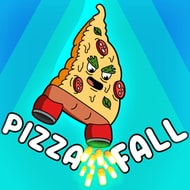
You’re three waves deep in Pizzafall, ducking between a wall of fries and a lone burger that won’t stop tailing your slice, and the only thing standing between a clean run and a wipeout is how fast your thumb can tap the spacebar again.
| Genre | Arcade shooter |
| Core objective | Descend through changing levels while clearing food-based enemies |
| Controls | W/D or arrow keys to move, spacebar to shoot |
| Typical session | Around five minutes per run |
Dodging Fry, Burger, and Salad Waves
The setup is simple on paper: you control a pizza slice fitted with shooters, and the game throws waves of fries, burgers, and salads at you as you move. Fries tend to arrive in tight clusters that block a lane rather than chase you directly, which is exactly why new players get clipped — they treat a fry wall like a single obstacle instead of a formation that needs to be shot through or slipped around. Burgers move with more intent, drifting toward your slice’s lane, so standing still near one is rarely a safe choice.
Salads show up less often but tend to punish hesitation, sitting in a spot you need to pass through rather than one you can shoot from a distance. The game rewards constant micro-adjustment more than raw reflexes; most early losses come from players holding one lane too long instead of using the full width of the screen. Once you accept that standing still is the actual danger, not the enemies themselves, runs start lasting noticeably longer.
The word game gets thrown around loosely in browser arcade circles, but Pizzafall earns it by making positioning matter as much as shooting speed. There’s a rhythm to alternating movement and fire that beginners usually miss for the first run or two.
Earning Salami Points in Pizzafall
Clearing enemies feeds you salami points, the currency Pizzafall uses to unlock power-ups mid-run. Salami points accumulate fast against fries since they die in single hits, slower against tougher burger formations, which pushes a natural strategy: farm the easy lanes early, then spend the points before a harder wave forces your hand.
Power-ups pulled from salami points don’t last the whole run, so timing the purchase matters. Spending everything the moment you hit a threshold often wastes the boost on an easy stretch, while holding out too long risks losing it all to a burger you couldn’t dodge. Most experienced players save at least one power-up purchase specifically for whatever wave follows a visible difficulty spike.
This tension between saving and spending is what keeps Pizzafall from feeling like a pure shooting gallery. It’s a small resource-management layer sitting under a fast arcade shell.
How the Levels Change as You Descend
Early in a run, enemy density stays low enough that you can clear a lane in one or two shots and move on. By the time you’re several waves down, fries start arriving in overlapping clusters and burgers appear in pairs rather than alone, which changes the whole approach — you’re now managing two threats at once instead of reacting to one.
Later stretches introduce salad placements that force you to commit to a lane before you can see what’s behind it, which is where most community discussion around the game gets heated. Some players find this blind commitment exciting; others call it an unfair difficulty jump because it punishes movement decisions made with incomplete information. Both reactions are fair, and it’s one of the more debated parts of how the descent is paced.
Common patterns players watch for as levels shift include:
- Fries clustering tighter as density increases
- Burgers appearing in pairs after the first few waves
- Salad placements demanding an early lane choice
Timing Your Shots in Pizzafall
Advanced play in Pizzafall comes down to shot timing more than movement speed. Firing continuously wastes shots on empty space between waves; firing in short bursts right as a formation enters range clears it faster and leaves your slice free to reposition sooner. Players chasing longer runs tend to hold fire for that half-second window rather than spraying constantly.
Casual players usually treat every wave the same way, moving and shooting on instinct, and that works fine for a quick five-minute session. Players aiming for longer streaks start reading formations before they fully load in, adjusting lane position a beat early instead of reacting after the wave arrives.
Either style is valid, but the gap between them shows up clearly once salad-heavy stretches start punishing late reactions.
- What’s the difference between how fries, burgers, and salads behave in Pizzafall? Fries block lanes in clusters and die in one hit, burgers actively drift toward your position, and salads demand an early lane commitment since they often sit in blind spots.
- How do you get more power-ups during a run? Power-ups are unlocked by spending salami points earned from clearing fries, burgers, and salads, so building up a reserve before a difficulty spike is the usual approach.
- Does a Pizzafall run end at a fixed point or keep going until you lose? Runs continue as waves get denser until your slice is hit, with most sessions running around five minutes depending on how well you manage salami points and shot timing.
Pizzafall works because it never lets a single system carry the whole game — shooting, salami points, and lane positioning all lean on each other, and the moment you stop reading fry clusters as one obstacle is usually the moment your runs start lasting.
Comments
There are no reviews yet. Be the first one to write one.