















Geometry Dash





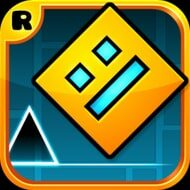
Geometry Dash looks like a rhythm toy you tap along to a beat, but it plays like a memorization exam where one mistimed jump erases the entire run. That gap between first impression and actual demand is the reason so many players bounce off Stereo Madness before realizing the game barely started.
| Genre | Rhythm-Platformer |
| Platform | Mobile / Desktop |
| Controls | Tap or click to jump, hold for continuous jumping in some forms |
| Core Mechanic | Timing jumps and form-switches to a level’s music while avoiding instant-death spikes |
The One-Hit Rule That Defines Geometry Dash
There’s no health bar in Geometry Dash. Touch a spike, misjudge a gap, or clip an obstacle at the wrong angle, and the run ends instantly, sending you back to the start of the level or to your last checkpoint if practice mode is active. This single rule shapes everything else about how the game is played and discussed — it’s why levels are memorized rather than reacted to, and why a level like Cycles feels completely different on your first attempt versus your fiftieth.
Beginners consistently misjudge this. They treat early levels like Back on Track or Polargeist as reflex tests, when in reality even the earliest official levels are built around pattern recognition. Once you’ve run a section enough times to know exactly when a spike appears relative to the music, the jump itself becomes almost automatic.
Speedrunners approach this rule differently than casual players. Where a casual player leans on practice mode and checkpoints to inch through a level section by section, speedrunners often avoid practice mode entirely for record attempts, since community rules on many leaderboards only count runs completed in normal mode from the start.
Difficulty Tiers, From Easy to Demon
Levels in Geometry Dash are rated across a fixed scale — Easy, Normal, Hard, Harder, Insane, and then Demon, which sits above the rest and carries its own five-step scale from Easy Demon up to Extreme Demon. The jump between Insane and even the lowest Demon rating is steep enough that plenty of players describe beating their first Demon as a genuine milestone, and levels like Deadlocked are commonly cited as a first Demon clear specifically because of how it’s structured.
What surprises newer players is how much variance exists within a single tier. Two levels rated Insane can feel wildly different depending on whether the difficulty comes from tight timing windows or from sheer level length, and forum discussions frequently argue over which factor should weigh more in a rating.
Switching Between the Cube, Ship, and Other Forms
Geometry Dash isn’t one game mechanically — it’s several, stitched together by portals. The cube is the default form and the one most players associate with the series, but portals swap you into the ship for gravity-based flight sections, the ball for surface-flipping puzzles, the UFO for tap-based hovering, the wave for tight diagonal corridors, and later the robot and spider forms for jump-height control and instant teleport-style movement.
The wave form in particular trips up a lot of players moving from cube-based levels, since its movement logic is inverted compared to everything else — instead of a single jump arc, you’re holding to angle upward and releasing to angle down, which takes real repetition to internalize.
Orbs, Pads, and the Difference Between Them
- Jump orbs require a tap at the right moment to trigger, rewarding timing over reflex
- Jump pads trigger automatically on contact, which makes them more forgiving but also easier to misuse
- Gravity orbs and portals flip your form’s orientation entirely, often mid-sequence, which is where a huge share of first-time deaths happen
Practice Mode Versus Normal Mode
Practice mode places checkpoints throughout a level that you can jump back to instantly after a death, and it’s the single biggest tool for learning a level’s layout without losing your patience entirely. What it doesn’t do is count toward most completion tracking or leaderboard verification, which is exactly why some purists in the community treat heavy practice-mode reliance as a slightly lesser form of finishing a level, even though nearly everyone uses it while learning.
This is one of the more openly debated aspects of Geometry Dash’s culture. Newer players sometimes feel judged for leaning on checkpoints, while longtime players generally agree practice mode is how virtually everyone actually learns hard content before attempting a legitimate run.
Moons, User Coins, and What Recent Updates Added
A recent update expanded the game’s leaderboard system to specifically track Moons, Demons, and User Coins, giving dedicated players a clearer way to compare progress on the harder side of the game rather than just overall level completions. The same update introduced new Gauntlets — themed groupings of levels bundled together — along with a more precise editor trace system for players building their own content.
Secret coins hidden inside official levels feed into this same progression loop: each official level hides three of them, usually tucked behind a route you wouldn’t take by accident, and collecting enough unlocks additional icons for players focused on customizing their Icon Kit rather than just clearing content.
Demons: Where Difficulty Actually Escalates
Once you’re past the official level list, the real difficulty curve lives in user-created levels, built and shared through the game’s level editor. Extreme Demons in particular regularly take dedicated players weeks or months of attempts rather than hours, and levels like Bloodbath and Tartarus are frequently cited in community discussions as historically significant for both their difficulty and how they shaped later Demon-tier design.
Why the Purchase Model Matters to This Community
Geometry Dash is a one-time purchase with no in-app purchases attached, which stands out enough in its own genre that players bring it up unprompted in reviews. That structure means the level editor and full level catalog aren’t locked behind a separate paywall the way many mobile platformers handle content — everything you’re rated on is available from the same purchase.
Common Mistakes Beyond the Basics
Past the beginner stage, most mistakes in Geometry Dash come from rhythm mismanagement rather than misunderstanding a form. Players jump slightly early or late relative to the music rather than the visual cue, which works until a level intentionally desyncs its beat from its obstacle placement — a trick several harder levels use specifically to punish music-based timing.
Advanced players instead train themselves to react to visual spacing between obstacles, treating the music as secondary reinforcement rather than the primary timing signal. This shift is one of the more meaningful jumps in skill players report once they consciously make it.
Is Geometry Dash mostly about memorization or reflexes?
Both matter, but memorization carries far more weight than raw reflex once you’re past the earliest official levels — even skilled players fail unfamiliar Demon-tier levels repeatedly until the pattern is internalized.
Why do some levels feel unfair compared to others?
Certain user-created levels intentionally desync visual obstacles from the music’s beat, which breaks the timing habits players build on official levels and is a frequent source of frustration in community discussions.
What should a new player actually focus on first?
Getting comfortable with cube and ship movement on the earliest official levels before attempting anything with the wave form tends to build a steadier foundation than jumping straight into harder Demon-tier content, including any level rated Insane or above.
Geometry Dash’s real trick is that it never stops introducing new movement logic — by the time the wave form or a brutal Extreme Demon like Tartarus shows up, and Moons and User Coins start factoring into how you measure progress, you’re playing a noticeably different game than the one Stereo Madness introduced, even though the core one-hit rule never changes.
Comments
There are no reviews yet. Be the first one to write one.