















Super Speeder









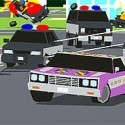






What happens when a speed booster you were counting on for the final stretch simply isn’t where you remembered it? That’s the moment Super Speeder tends to separate players who’ve memorized a track from players still learning it — and it happens more often than the game’s simple controls suggest it should.
| Genre | Racing / Skill |
| Platform | Browser |
| Controls | Arrow keys to steer, space bar to boost |
| Core Mechanic | Drifting, boosting, and precision driving across timed tracks |
The Core Loop Behind Super Speeder
Super Speeder runs on a loop its own community sums up bluntly: speed, crash, repeat. You steer the speeder through a track, chain speed boosters for momentum, and try to reach the finish before either the clock or your own reflexes give out. It sounds simple on paper, and the controls genuinely are — arrow keys to steer, space bar to boost — but the game’s difficulty lives almost entirely in timing rather than mechanical complexity.
Beginners tend to underestimate how much boosting changes the speeder’s handling. Chaining boosts without adjusting your steering input is one of the fastest ways to clip a wall in Super Speeder, since the added speed shrinks your margin for correction almost instantly.
Casual players often stick to shorter sessions and treat each track as a standalone challenge, while players chasing leaderboard times tend to run the same track dozens of times in a row, shaving fractions of a second off each attempt.
Time Attack, Endless, and Challenge: Picking the Right Mode
Super Speeder splits into three modes, and each one asks for a different mindset. Time Attack is the most straightforward: finish before the clock runs out, with speed and control prioritized over anything fancy. Endless mode drops the finish line entirely and instead tests how long you can sustain drifting and boosting without a crash ending the run — this is where chaining boosts becomes less optional and more essential.
Challenge mode is the one most players describe as genuinely demanding, since it expects you to use the track’s own layout, ramps, tight corners, and boost placement, against itself rather than relying on raw speed.
Where New Players Lose Time Without Realizing It
- Ignoring speed boosters entirely in early attempts, treating them as decoration rather than route-critical pickups
- Overcorrecting after a drift instead of letting the speeder settle before the next turn
- Playing every track at full boost regardless of the corner ahead, which is the single most common cause of avoidable crashes
Drifting Mechanics Most Players Miss
Drifting in Super Speeder isn’t just a cosmetic flourish — it’s the mechanic that determines whether a tight corner costs you speed or actually preserves it. Players who master drift timing carry momentum through turns that newer players brake for entirely, and that difference compounds across an entire track.
It’s a small window.
Advanced players also learn to read a track’s rhythm rather than its individual obstacles, anticipating where a booster will appear based on the track’s pacing rather than reacting to it on sight. This is the kind of pattern recognition that separates a clean lap from a merely finished one.
The Honest Trade-Off Players Debate
The control sensitivity in Super Speeder is genuinely divisive among regulars. Some players find the drift response precise once you adjust to it; others feel it’s twitchy enough that small corrections turn into overcorrections, particularly on Challenge mode’s tighter sections. There isn’t a universal fix — most advice boils down to spending time in Time Attack mode specifically to build a feel for the sensitivity before attempting harder tracks.
Community Language Worth Knowing
Regulars talk about “chaining boosts” when describing back-to-back booster pickups without losing speed between them, and a “clean lap” refers to finishing a track without a single collision — a benchmark that matters more in Endless mode, where one crash ends the run outright.
Frequently Asked Questions
- How do you boost effectively in Super Speeder? Boosting works best when timed into a straightaway rather than mid-turn, since the added speed reduces your ability to correct a drift already in progress.
- What’s the real difference between Time Attack and Endless mode? Time Attack has a defined finish line and a countdown, while Endless mode removes the finish line entirely and instead ends the moment you crash, rewarding sustained control over raw speed.
- Why does Super Speeder feel harder in the first few attempts than it should? Most of the early difficulty comes from control sensitivity rather than track design — players who spend a session adjusting to drift timing in Time Attack mode consistently report smoother runs afterward.
Super Speeder’s whole appeal comes down to how much control lives inside a two-button setup, and once chaining boosts through a corner stops feeling risky and starts feeling deliberate, the speeder handles like a completely different vehicle than it did on your first attempt.
Comments
There are no reviews yet. Be the first one to write one.