















The Message From Deep Space















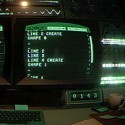
You adjust a radio frequency on your retro computer in The Message From Deep Space, send a short burst toward a meteorite in 1973, and wait to see whether the signal that comes back changes. That moment of waiting is the entire game in miniature: nobody hands you a language, so you earn one transmission at a time.
| Genre | Puzzle, translation, science fiction |
| Platform | PC (Steam) |
| Setting | 1973, a meteorite that broadcasts radio waves |
| Your Role | The mission’s Translator |
| Length | 30+ hours of gameplay |
| Dialogue | 1000+ in-game dialogues |
Becoming the Translator in The Message From Deep Space
Earth has received a meteorite that broadcasts radio waves, and you are the mission’s Translator. Your job is to design replies to its transmissions, and a correct reply makes the meteorite answer with something new. Through that back-and-forth, patterns, words, syntax, and meaning slowly take shape, which is the core mechanic in one sentence.
There is no phrasebook. The language has to be assembled from scratch.
Early in the game the incoming numbers look random, and the first real breakthrough comes when a message changes in response to something you sent. The setting is inspired by the Golden Record aboard the Voyager I probe, and space-history fans often say the realistic approach is the best part. Puzzle purists enjoy the slow climb from noise to meaning, while anyone expecting quick answers will feel the gap.
Radio Waves, Frequencies, and Designing Your Reply
Each reply is a transmission you design by frequency on the retro computer, and every one acts like a small experiment. If the meteorite’s message changes, you learned something, and if it stays the same, you ruled out a guess. Beginners often change too many things at once, which leaves them unsure what actually caused a reaction.
Change one thing at a time. It is the quiet rule that separates smooth runs from long, confusing ones.
Advanced players treat each successful reply as a controlled test and note exactly what moved. The retro computer interface rewards that discipline, since a messy approach quickly buries the signal you were trying to read. Players with a programming mindset tend to feel at home here and often finish sections faster than they expect.
The Dictionary You Build Yourself
The user-driven dictionary is the heart of the translation work. You manage the entries yourself, so the dictionary is only as good as your notes, and a wrong guess recorded as a fact can mislead you for hours. Careful players update it right after a successful reply instead of waiting until later.
Language lovers get the most from this part of the game, because grammar patterns emerge one stubborn rule at a time. Words, syntax, and meaning stop being abstract terms and become things you can test.
By the time you reach a section with six new words, you may only understand two of them, and that is normal for the game. Players share that feeling often, and it usually passes once a pattern connects the leftover words to something you already know. Patience matters more than speed at this stage.
Linguist, Programmer, and Astronomer: The Team Around Your Desk
You never translate alone. A meticulous linguist, a single-minded computer programmer, and an affable astronomer work beside you and respond to your actions, and over 1000 in-game dialogues keep the team feeling alive during long stretches of puzzling.
They are guides and not answer keys. Their comments nudge you in a direction without solving the transmission for you.
The contrast stays with players: a chatty, warm team in the room and a silent meteorite outside it. Listening to their dialogue after a failed reply often reveals which assumption you made too quickly. Anyone who enjoys character-driven puzzle games will find the banter keeps the long sessions from feeling lonely.
Advanced Habits Most Translators Miss
Strong players develop routines that save hours. They re-read earlier transmissions when a new word seems related, and they try mirroring or returning a sequence before inventing a wild theory. The game occasionally offers a hint if you wait and try different incorrect replies, so patience can be an actual tool.
- Change one variable per transmission so you know what caused the reaction.
- Update the dictionary immediately after a successful reply.
- Revisit earlier messages when a new word seems related to an old one.
- Step away when stuck, since a fresh look often reveals an obvious pattern.
These habits matter most at well-known sticking points, such as transmission 179, which players still discuss on the Steam forums. Knowing how others approached the problem can save time, though many players prefer to suffer a little first.
Where The Message From Deep Space Frustrates Players
The honest complaint is the occasional leap in logic. Some players point out that the game spends many messages checking whether you understood basic math, then expects a big jump based on cryptic information. That mismatch can leave a puzzle feeling unfair even when the solution is clever.
Hint timing also varies. One player reports a hint appearing after waiting and trying wrong answers, while another waited 30 minutes with no hint and finally looked up the solution.
Even so, reviews lean strongly positive, and fans praise the satisfaction of finally understanding a message that looked impossible. Players who love being stuck in a good way will thrive, while anyone who wants a gentle path may bounce off early. With more than 30 hours of content, the frustration can also be part of the journey.
Translator Questions Answered
- How do you get hints when stuck? The game can offer a hint if you wait a while and try different incorrect replies, though some players report waiting a long time without one. If a transmission still refuses to open up, review your dictionary and try changing a single frequency element instead of rewriting everything.
- How long does the game take to finish? Expect more than 30 hours of gameplay, depending on how long you stay stuck on tough transmissions. The 1000+ in-game dialogues and the steady growth of your dictionary keep long sessions feeling like progress.
- Do you need to be good at maths or languages? Neither is required, but curiosity and patience are. Early lessons check your grasp of basic math, and the linguist and programmer help explain patterns, so the game teaches you as you translate.
The Message From Deep Space rewards the Translator who changes one frequency at a time, trusts the dictionary over a hunch, and listens when the linguist, the programmer, and the astronomer talk through a stubborn transmission. Stay patient when the meteorite answers in riddles, because every correct reply makes the 1973 signal feel a little less like noise.
Comments
There are no reviews yet. Be the first one to write one.