















Echoes in Darkness









You wake up in a house you do not remember, and in Echoes in Darkness that is the last simple thing that happens. The silence feels watched, the hallways seem to keep something back, and every room appears to remember a tragedy nobody has told you about. This is a first-person psychological horror game built on slow dread instead of chases, and it asks you to piece together what happened by reading what the house leaves behind.
| Genre | First-person psychological horror |
| Setting | A house the protagonist does not remember |
| Mode | Single-player |
| Focus | Exploration and environmental storytelling |
| Content note | Non-graphic violence, psychological trauma |
A House That Watches in Echoes in Darkness
The setup is stripped down on purpose: a house, a gap in your memory and a silence that feels like it is paying attention. You are not given a mission briefing or a weapon, only rooms to walk through and hallways that seem to guard a secret. The developer note on the store page says the game does not chase you, it waits for you, and that line describes the pacing better than any genre label. Anyone expecting a monster to burst around the next corner will have to recalibrate quickly.
Waiting is the whole design.
Early in the run, before you have read your first note, the house gives you nothing to hold onto. That is where horror fans who prefer dread to jump scares will settle in, while players who need constant stimulation may find the opening stretch demanding. Both reactions come with the territory.
The Presence That Guides Instead of Chasing
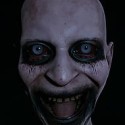
The store describes a presence that inhabits the house and manifests in every corner: in architecture that seems to twist, in sounds that distort and in the constant sensation that someone, or something, walks behind you. Its role is not to hunt you but to guide and influence you, pushing you toward a truth that has stayed hidden for far too long. That makes it closer to a narrator you cannot see than to a standard monster.
A common mistake with this kind of horror is to wait for an attack and then relax when nothing happens. Relaxing is risky here, because the architecture and the sound design are how the presence speaks to you.
Mystery fans who like puzzling out supernatural stories will enjoy asking whether the presence is helping or harming you. The game never settles that question quickly, which keeps the unease alive for as long as you are walking its rooms.
Notes, Photographs and the Forbidden Book
The spine of the story is a set of notes written by a woman, which reveal the deterioration of a mind consumed by a forbidden book. That book opened the door to something that does not belong in this world, and the house has been marked by the consequences ever since. Reading is not a side activity here; it is the main way the plot moves forward.
- Notes that reveal the woman’s mental deterioration
- Photographs of the family who lived in the house
- Objects left behind in rooms that seem to remember
- Visual details that confirm or contradict what you read
Fans of environmental storytelling will appreciate how those four sources overlap, since a photograph can change the meaning of a note you read ten minutes earlier. Taking the time to compare them is more rewarding than rushing to the next room.
The store also says that this story is not unique and that it has happened before, with each echo of the past bringing you closer to a fate that may already be written. That line explains the name of the game and hints that the house has done this more than once.
Distorted Sounds, Whispers and Low Light
The store lists distorted sounds, creaks, whispers and lighting designed to keep tension constant, all inside rooms that seem to remember what happened there. Full audio is supported in English, Spanish and Simplified Chinese, so sound is a first-class part of the design rather than an afterthought. In a house where silence weighs more than darkness, every change in sound is information.
- Stop moving when a creak or whisper starts, and note which room you are in.
- Check whether the architecture around you looks different from a moment ago.
- Look behind you before continuing, since the sensation of being followed is part of the design.
Headphones are the obvious advice for a sound-driven horror game, because whispers and distortions are cues you can easily miss through speakers.
Constant tension is divisive, and players who find long stretches of unease tiring should take breaks. The pressure is cumulative, so a short session can feel very different from a long one.
Walking Simulator or Survival Horror in Echoes in Darkness
Steam users tag the game with Walking Simulator, Survival Horror, Hidden Object, Immersive Sim and Story Rich, labels that pull in different directions. The mix suggests that exploring, inspecting objects and following the story matter far more than combat. Players who want a gun in their hands will likely be disappointed, while those who enjoy slowly reading a place will feel at home.
The achievement list is short, with only three entries named Relicsfromelsewhere, Finish Game and Survivor. A list that small points to a compact project built around one clear story, not a sprawling sandbox of side objectives.
Some players dislike low-interaction horror and will say the walking simulator label undersells the fear, while others will say it oversells the action. Roughly 88 percent of the first 25 Steam reviews are positive, which is a small but encouraging sample for a game with a very specific audience.
Content Warnings and Who This House Suits
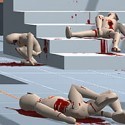
The developers are open about the content. Non-graphic violence appears as consequences of past events, such as blood, wounds and bodies without explicit detail. The narrative also deals with emotional abuse and psychological trauma, including manipulation, isolation, fear and the mental deterioration of several characters.
There is no sexual content, and the game is intended for a mature audience because of its emotionally intense themes. The developer note adds a specific caution for anyone sensitive to psychological horror, darkness or the feeling of being watched.
If those themes sit well with you, the game is a good fit for patient players who like atmosphere, notes to read and a story that is quietly sad as well as scary. If they do not, there is no shame in choosing something lighter, since what you find in this house may stay with you after you leave it.
Echoes in Darkness is strongest when the notes, the photographs and the forbidden book all point toward the same unsettling truth. The presence guides you instead of chasing you, and the twisting architecture makes every familiar hallway feel less certain than the last. If you want horror that waits patiently and lets your imagination do the rest, this house is worth the walk.
Comments
There are no reviews yet. Be the first one to write one.