















Dominus Gladiatus

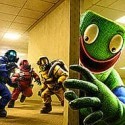
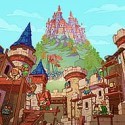











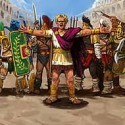
In Dominus Gladiatus you start by choosing one of six Domini, with a Ludus to build, a Slave Market to recruit from and a 160-day tournament already ahead of you. Nobody hands you a champion. You get a school, a market full of strangers and a crowd that has opinions. That setup matters more than any single fight, because the duels are watched rather than fought, and everything that decides them happens before the gates open.
| Genre | Gladiator management simulator, strategy |
| Mode | Single-player |
| Setting | Ancient Rome |
| Combat | Auto-battler duels and team battles |
| Structure | 160-day tournament against rival Domini |
| Art style | Hand-drawn 2D |
| Content | Violent, with blood and decapitations |
Six Domini and 160 Days: How Dominus Gladiatus Frames the Tournament
You pick one Dominus to lead, and the other five become your competition. Each has strengths, methods and a way of disrupting your Ludus, and you face them one by one on the road to the grand final. A tournament of 160 days is long enough that early choices compound, so what you do in the opening stretch shapes which rivals you can handle later.
Beginners tend to read the choice of Dominus as flavor. Each one brings strengths and a path to glory of their own, so the choice behaves more like a strategy than a skin. Read what each offers before committing, and think about how you actually like to run a school.
By the time the grand final comes into view, the rivals you have already beaten will have shaped your roster as much as your own training did. Strategy players who like to plan around a long calendar will find that the 160-day structure gives them plenty to optimize. Fans of permanent loss will feel the weight of every day on that calendar.
Building the Ludus Without Burying Your Roster
The Ludus is the heart of your school, and you expand it with new facilities as you train gladiators and develop their skills. The roster itself starts at the Slave Market, where you recruit men, spot hidden potential and strengthen your school as the battles grow deadlier. Every recruit brings different strengths and weaknesses, so reading potential is the skill the market rewards most.
- Morale across the roster
- Fatigue after training and fights
- Injuries that decide who must rest
- Discipline across the whole school
Those four pressures decide who rests, who is ready to fight and who can be pushed further. Management fans who enjoy juggling fatigue and morale will feel at home here, because there is always a gladiator who needs attention and never enough days to give it. Roster depth is the community shorthand for the cushion that lets you rest a fighter without losing a fight.
The central trap is sending an injured or exhausted gladiator into the arena. It may solve today’s problem, but it can damage the school’s future, and that is exactly the kind of decision the Ludus keeps putting in front of you. A careless Ludus buries its fighters, and a disciplined one produces champions.
Arming Gladiators for Duels and Team Battles in Dominus Gladiatus
Combat is an auto-battler, so you watch savage duels and team battles unfold without steering a single swing. Skills, equipment and preparation decide who survives, and your control ends at the gate. Roman blades, shields, helmets and armor are matched to a gladiator’s role, and the right loadout can turn an unproven fighter into a champion.
Beginners who expect to guide the fight need to flip their mindset, because the real work is done in the Ludus and at the armory. Players who prefer to steer every swing should know that before they buy. Team battles ask more of your roster than a single duel does, since several fighters need to be ready at once.
The stretch of seconds after the gates open, when nothing you do matters anymore, is the part only playing makes real. It is also the part most likely to divide players: the game carries a permadeath tag, one mistake can cost a gladiator his life, and the content includes blood and decapitations. Some will find that tension thrilling, while others will find watching a loss they could not influence hard to take.
Winning the Crowd Before the Gates Open
The crowd is ruthless, and Rome remembers spectacle. Win their favor and they may turn the arena to your advantage, but turn them against you and the crowd becomes another enemy. Survival here is not decided by steel alone.
Because the audience can influence a gladiator’s fate, spectacle and reputation can be worth as much as clean efficiency. Once the crowd turns on you, even a well-prepared fighter can find the arena working against him. That makes a gladiator’s style of fighting part of the strategy, not just his statistics.
The tension between efficient wins and entertaining ones is the part most likely to split strategy players. Those who optimize for clean victories may bristle at having to care about the crowd, while players who enjoy reputation systems will see it as the heart of the Dominus role. Either way, the crowd is a pressure you manage alongside morale and fatigue, never one you can ignore.
Questions Players Ask Before Their First Season
- Can you control gladiators during a fight in Dominus Gladiatus? No. Combat is an auto-battler, so duels and team battles play out on their own after you have trained, equipped and prepared your fighters. Your influence comes from skills, gear, rest and the crowd, not from commands given mid-fight.
- Do gladiators die permanently? The game carries a permadeath tag, and one mistake can cost a gladiator his life. That is why fatigue, injuries and morale matter so much: sending an exhausted fighter through the gates is a gamble with a recruit from your Slave Market.
- How long is the tournament? It runs 160 days, with six Domini competing and the rivals you do not choose building their own schools. You face them one by one on the way to the grand final, so your Ludus has to keep up with each rival’s methods across the whole calendar.
Dominus Gladiatus asks you to be a Dominus rather than a fighter: to read the Slave Market, protect your roster from fatigue and injuries, and send a gladiator through the gates only when the Ludus has done its work. The crowd still decides whether a good decision turns into glory, and across 160 days that gap between planning and spectacle is what makes each victory feel earned. If watching your preparation play out in blood sounds like the tension you want, the school is yours to run.
Comments
There are no reviews yet. Be the first one to write one.