















It’s Chopping Time!











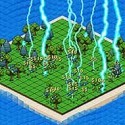
In It’s Chopping Time! you start on a secluded island with nothing but a cursor and a stand of trees, which matters because the game never asks you to click. Hovering is enough to chop, and that tiny change makes this incremental game feel lighter and more soothing than most clickers.
| Genre | Incremental idler |
| Players | Single-player |
| Core Input | Hovering the cursor over trees |
| Forces of Nature | Lightning strikes, tornadoes, tidal waves, hail, earthquakes, sunbeams |
| Art Style | Hand-drawn and isometric |
| Achievements | 57 |
Hover to Chop: The Core Loop of It’s Chopping Time!
The basic action is almost too simple. You move the cursor over a tree and it chops automatically, then you sell the wood for money. There is no clicking, which means long sessions do not tire your hand, and the rhythm of sweeping across the island becomes surprisingly meditative.
Money is only half of the economy. Colored wood logs drop alongside it, and both go into the skill tree, where permanent upgrades make every future run on the island stronger. The skill tree is where the game turns from a toy into a strategy puzzle, because the order you buy things in changes how quickly you grow.
Early in the game the island feels empty and the upgrades feel cheap. By the time the first forces of nature start unlocking, the pace shifts and the screen fills with action. That change is where most players say the game really clicks.
Forces of Nature: Lightning, Tornadoes, and Earthquakes
The hook is the set of forces of nature you summon to clear trees faster. Points of interest appear on the island, and you hover over them to trigger each force when they show up. The Steam description lists the full set:
- Lightning strikes
- Tornadoes
- Tidal waves
- Hail
- Earthquakes
- Sunbeams
The demo only included lightning strikes, and they were made overpowered on purpose so newcomers could feel the fun right away. The full game spreads that power across several forces, each with its own look and effect. Players mention earthquakes in particular, since the damage they deal to a whole stand of trees at once is hard to ignore.
Achievement names hint at the spectacle, with titles like The earth is alive! and They will snap like twigs! If you enjoy watching numbers and chaos grow together, this part of the game delivers it.
What New Lumberjacks Get Wrong
The most common beginner mistake is treating the island like a clicker. Because hovering does the work, extra mouse movement does nothing. A steady sweep across the trees is enough, and a good routine looks like this:
- Sweep the cursor across the trees to chop automatically.
- Hover over each point of interest the moment it appears.
- Spend money and colored logs in the skill tree instead of hoarding them.
- Repeat, adding each new force as it unlocks.
Missing points of interest is the second mistake. Each one is a chance to trigger a force of nature, and ignoring them slows the early game more than any bad upgrade choice. Efficiency-minded players treat every one as a small timing challenge.
The third mistake is waiting too long to spend. Permanent upgrades only help once you buy them, so saving for a perfect purchase usually costs more time than it saves.
After the Credits: Extra Modes and Leaderboards
The main game takes roughly three to four hours, according to player reviews. After that, players report around ten more game modes to try, which stretches the content well beyond the first clear. One Japanese reviewer even said the content after the main run felt like the real game.
Leaderboards add a competitive layer. You can race friends or the world’s fastest players, and the board rewards players who optimize skill tree order and force timing. Speedrunners tend to dive into this side of the game first.
Completionists have 57 achievements to chase, with names such as 1001 trees and The Bill Please! The mix of silly titles and tough goals makes the checklist more fun than a typical grind.
Where It’s Chopping Time! Divides Players
Reception on Steam is strongly positive, with about 86 percent of reviews positive at the time of writing. Praise focuses on how satisfying the chopping feels and how generous the hand-drawn art is. Criticism usually mentions that the main game is short and that the loop can feel passive once automatic chopping takes over.
A Gold Edition is available as optional DLC. It is purely cosmetic and does not speed up progress, so it works as a way to support the developer rather than a shortcut. Some players call it pointless, while others buy it happily.
Accessibility is a nice touch. The options menu includes a wave movement setting with normal, gentle, and flat modes, which helps players sensitive to motion sickness. Not every incremental game thinks about comfort this carefully.
Island Questions From New Lumberjacks
Do you have to click to chop trees?
No. Hovering the cursor over a tree chops it automatically, and hovering over a point of interest triggers a force of nature. That makes the game easy to play with a trackpad or a tired hand.
How long does the main game take?
Players report roughly three to four hours for the main game. After that, extra modes and leaderboards offer plenty more to do, so total playtime can run much longer for completionists.
What is the skill tree for?
The skill tree holds permanent upgrades bought with money and colored wood logs. Spending in it makes trees fall faster and unlocks stronger forces of nature, so it drives almost all progression.
It’s Chopping Time! turns a quiet island into a stage for tornadoes, hail, tidal waves, and earthquakes, all triggered by a cursor that never needs to click. Between the skill tree upgrades, the extra modes, and the leaderboards, there is plenty of reason to keep sweeping those trees long after the first clear.
Comments
There are no reviews yet. Be the first one to write one.