















Parasomnia: No REM





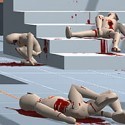


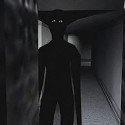


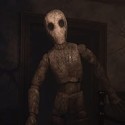
Closing your eyes in Parasomnia: No REM does not hide the world from you; it is the one moment the world becomes readable. That reversal drives a first-person psychological horror adventure in which a sleepwalking protagonist must solve puzzles inside a mind shaped by childhood trauma.
| Genre | Psychological horror puzzle adventure |
| Perspective | First-person |
| Mode | Single-player, linear story |
| Core mechanic | Close Eyes inside the No REM state |
| Setting | Two interconnected worlds |
How Close Eyes Works in Parasomnia: No REM
The protagonist sleepwalks, and while asleep the mind becomes trapped in the No REM state, inspired by a real stage of sleep associated with sleepwalking. In that state the rules of the waking world can no longer be trusted. Text becomes unreadable, images distort, and familiar things take on different meanings. The Close Eyes mechanic lets you reconnect with the waking world for a moment, and that brief glimpse is how you read, recognize and reveal what the dream is hiding.
Beginners tend to keep their eyes open too long, searching a distorted wall for meaning that will not appear. The habit that works is to look, close your eyes, and compare what you see. Early in the game this feels like a simple trick, but by the time puzzles stack clues across several rooms, it becomes the core skill.
Players who enjoy careful observation get the most from this, since Close Eyes is a reading tool rather than a way to escape danger.
Distortion as a Language of Clues
The No REM state does not break things randomly. The distortion follows patterns, and learning to read those patterns is most of the puzzle work. You will run into several forms of it:
- Text that stays unreadable until you close your eyes
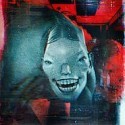
- Images that warp into shapes you cannot recognize
- Surroundings that change as memories begin to surface
- Familiar objects whose meaning shifts from one moment to the next
The trick is to treat anything that looks wrong as information. A warped picture or an illegible note is usually the clue itself, which is why players who rush past strange details end up stuck.
Moving between the two interconnected worlds adds another layer, because a room you thought you understood can mean something different once you return to it. Community discussion often centers on this kind of double reading of the same space.
Puzzles That Return Memory Fragments
Each completed puzzle reveals a new fragment of the protagonist’s memories, so progress is measured in story rather than score. The puzzles combine the rules of No REM with the Close Eyes mechanic, and the environments feel shaped by memory instead of built as ordinary rooms. That is where the childhood trauma at the heart of the story comes through.
The structure is linear, and that is an honest trade-off. Guidance is strong, so you rarely wonder where to go next, but players who want open exploration may find the path restrictive. The story also touches on the consequences of taking sleeping pills, and the developers advise player discretion, so it is worth knowing before you start.
Narrative-driven horror fans will treat every memory fragment as a reward. A demo is available on Steam for anyone who wants to test the Close Eyes mechanic before committing to the full story.
Horror Without Constant Jump Scares in Parasomnia: No REM
A common question is whether the game is scary without constant jump scares, and the answer is that dread replaces shock. The horror comes from the unpredictable rules of dreams and from the trauma that haunts the sleepwalker, and your own perception becomes part of the danger. When you cannot trust what you read or see, every room asks you to doubt something.
That tension comes from uncertainty. You never know whether the next room will follow the rules you just learned, and the moment you close your eyes to check, you are choosing to step away from the nightmare and back into it.
Players who expect a monster chase in every corridor may find the pacing quieter than they hoped. Those who like slow, psychological unease will find that the quiet is exactly the point.
Parasomnia: No REM turns a simple action, closing your eyes, into a puzzle language that makes every distorted note and warped image a decision. The sleepwalking protagonist, the two interconnected worlds and each recovered memory fragment give the horror a shape that stays with you long after the No REM state fades.
Comments
There are no reviews yet. Be the first one to write one.