















Find the Needle




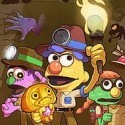











You drive the shovel into the pile, the metal detector chirps once, and a cloud of dry hay settles across a warehouse whose doors refuse to open. That is the opening minute of Find the Needle, a simulation about a former farmer with no memory and one instruction: find the needles. The haystack holds about six million strands, and nobody has promised the search will be short.
| Genre | Simulation, incremental, automation |
| Platform | Windows PC |
| Mode | Single-player, first-person |
| Goal | Collect every needle hidden in the haystack |
| Starting tools | Shovel and metal detector |
| Tech tree | Over 300 upgrades |
Six Million Strands: Starting Find the Needle by Hand
The setup is deliberately strange. You were a farmer, or at least you think you were, and now you stand in a warehouse facing a haystack with no visible end. There is no one to ask about the locked doors and no explanation for how you got inside. The game hands you a shovel and a metal detector and leaves the rest to you, which gives the first hour an odd, slightly unsettling charm.
Digging by hand is the first stage of the loop, and it is slower than it looks. You shovel hay, sell it, and spend the money on tools that move more hay per trip. Buckets, wheelbarrows, pitchforks and vacuums all exist to make manual work faster. The metal detector is what keeps the search from feeling random, because six million strands with no guide would be a chore instead of a puzzle.
Dig, sell, upgrade, repeat. That rhythm carries the whole opening stretch of the game.
Anyone who enjoys incremental and idle games will recognize the loop immediately, because the numbers climb in the same satisfying steps, only with a physical shovel attached.
Early Mistakes With the Shovel, Bucket and Wheelbarrow
The most common beginner error is rushing toward machines. The promise of belts and robotic arms is strong, so new players save every coin for automation and skip the hand tools that pay for it. Early in the game, a wheelbarrow or bucket returns its cost much faster than a half-built line that nothing is feeding.
The second mistake is ignoring the metal detector as a guide. Treat it as the thing that tells you where digging is worth your time, not as decoration. Players who dig without paying attention to it burn through hay income while the needles stay exactly where they were.
The third mistake shows up the moment you place your first machine. Machines need power and they need to be fed by belt, so a baler with no wiring is just an expensive statue. Community talk about a bottleneck usually starts right here, when one slow link in the chain leaves everything after it idle.
Belts, Balers and Scanners: When Find the Needle Starts Playing Itself
Once balers and scanners appear, the shape of the game changes. You stop being the one who searches and become the one who arranges the search. Placing real machines, wiring the power and routing hay along belts turns each session into a small logistics problem, and the machines slowly replace the work your hands used to do.
- Conveyor belts carry hay from one machine to the next.
- Balers compress loose hay into bales you can sell.
- Scanners look for needles so you no longer have to.
- Robotic arms and drones take over the digging and sorting.
The first time a belt carries hay away without you touching a shovel is the moment most players say the game clicks. From there the challenge is layout: keeping every machine fed, keeping power stable, and making sure faster machines do not starve because of slower ones upstream.
Fans of factory builders will spend most of their time in this stage, tuning lines until no machine waits on another.
Hay Pulp, Eco Bricks and Paper: Where the Money Comes From
Hay is not only something to dump on the floor. It can be turned into hay pulp, compressed bales, eco bricks, hay paper and pellets, and each product needs its own production line. Paper machines and sorting machines sit deeper in the tree, so the range of things you can make grows as your factory does.
The smart approach is to think of raw hay as a starting material rather than the final product. Processing it into something more valuable is how the profits scale, and profits are what pay for the next round of machines. Each new product line asks the same question: does this raise income enough to justify the space and power it takes?
Completionists who like weighing every option will enjoy comparing which product earns the most from the same pile of hay.
Over 300 Upgrades: Reading the Tech Tree Without Wasting Money
The tech tree holds over 300 upgrades that unlock machines, raise production speed, improve efficiency and expand your factory. That is a lot of choices, and the tree rewards patience. Buying every cheap upgrade is rarely the best plan, because some of them do nothing for the problem you are actually facing.
A useful rule is to spend on whatever removes your current bottleneck. If scanners are waiting on belts, buy belt speed. If the factory is full, buy space. By the time you reach larger factories, efficiency upgrades tend to matter more than adding yet another machine.
There is an honest cost to all this scale. The developers warn that very large factories are heavy on the processor, so a slower CPU can drag the frame rate down late in the game. Integrated graphics are not supported at all, which is worth knowing before you plan a giant warehouse.
What Happens After the Last Needle in Find the Needle
The store page answers the biggest question with a shrug: nobody has said what happens when you finish. That is a hook and a risk at the same time. Some players love the mystery, while others want a clearer promise before they commit dozens of hours to a factory.
The locked doors, the missing memory and the unexplained warehouse give the setting real weight. You start by hand, end with machines doing the looking, and the story hangs quietly over both. The tone stays light, but the question of why you are there never quite goes away.
Spoilers are best avoided here. Treat the ending as one more needle you have to earn.
Questions Players Ask Before Digging In
How do you find needles faster?
Lean on the metal detector early and upgrade your hand tools before chasing automation. Once scanners and robotic arms unlock, they take over the searching, so your job becomes keeping belts and power running smoothly.
Does the game have an ending?
Yes, the goal is to collect all the needles, but what follows is deliberately left mysterious. The store page only hints that no one has said what happens next, so expect the answer to be part of the payoff.
What should you build first in the factory?
Start with belts and a baler, because they give you steady income from raw hay. After that, add scanners, then work toward products like hay pulp and hay paper, which give the factory more valuable output to sell.
Find the Needle takes a joke premise and turns it into a genuine factory puzzle, where every shovel swing, belt and scanner feeds the same long hunt through six million strands. Whether you care most about the tech tree, the hay products or the mystery behind the locked warehouse doors, the pull is the same: one more machine, one more needle, one more look at what sits at the bottom of the pile.
Comments
There are no reviews yet. Be the first one to write one.