















Do NOT Look at The Sun
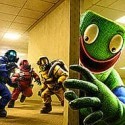



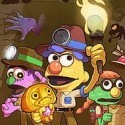


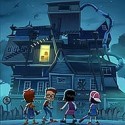








Do NOT Look at The Sun takes a familiar horror warning and hides an elaborate puzzle game underneath it, turning daylight into something that must be understood before it can be safely approached. This deceptive Japanese horror puzzle game asks you to solve riddles involving calendars, unusual wordplay, concealed mechanics, and clues that refuse to explain themselves immediately. The further you progress, the less reliable ordinary logic becomes, and the closer you get to the Sun, the more the game’s strange secrets begin to connect.
Learning the Real Rules of Do NOT Look at The Sun
The first trap is assuming that the warning is the entire game. It is only the beginning of a much larger mystery, because the player eventually has to understand why the Sun is dangerous and what solving the surrounding puzzles has to do with reaching it. The source of daylight becomes an object of investigation rather than simple scenery, which changes the meaning of almost every clue connected to progression.
Early in the game, the player is encouraged to examine details that might normally be ignored. A date on a calendar, an oddly constructed sentence, or an interaction that seems too specific can become important later. The game rewards players who resist the urge to dismiss strange details as decoration, because hidden mechanics can turn apparently insignificant information into a necessary part of a solution.
Players who enjoy escape-room puzzles will recognize the satisfaction of collecting several pieces of information before discovering the connection between them. Horror players who prefer atmosphere over traditional puzzle solving may initially expect the Sun itself to provide the danger, but the riddles quickly establish that understanding the danger is just as important as avoiding it.
Calendar Clues That Demand a Second Look
Calendar puzzles work especially well because calendars are so familiar. A player naturally understands dates, weekdays, and the arrangement of a month, so the game can use that familiarity to create deceptive clues. What appears to be ordinary date information may instead contain a pattern, a reference, or a relationship that only becomes obvious after another piece of the puzzle has been understood.
A common beginner mistake is searching immediately for a simple numerical sequence. The better approach is to ask why the specific calendar information exists in the first place and whether another clue changes the way it should be read. The answer may depend on positioning, wording, repetition, or an association that is not obvious during the first inspection.
By the time later calendar information appears, the player has learned to treat dates as potential puzzle components rather than passive background details. Keeping track of suspicious information can help because a clue that seems useless during one puzzle may suddenly become meaningful after a later discovery.
Wordplay, Misleading Clues, and Lateral Thinking
Do NOT Look at The Sun repeatedly challenges the assumption that words should be interpreted in the most direct way. A phrase can hide another meaning through sound, association, structure, or an unusual reading, making language itself part of the puzzle mechanism. The player therefore needs to experiment with interpretations instead of waiting for every clue to behave like a conventional instruction.
The satisfying moments often happen when a word or phrase that seemed irrelevant suddenly connects to something encountered earlier. Nothing necessarily changes on screen at that instant; what changes is the player’s understanding. That kind of realization is particularly effective in horror because the solution can make earlier scenes feel stranger in retrospect.
A lateral-thinking player may deliberately test absurd interpretations when the obvious answers fail. That strategy fits the game well, although the unconventional logic can also be divisive because a solution that feels clever after discovery may be difficult to predict beforehand.
Hidden Mechanics Beneath the Surface
The game does not always announce when a mechanic has become relevant. Some interactions only make sense after the player recognizes that an ordinary-looking element has another purpose. This creates a layer of experimentation where solving the puzzle may require questioning the interface, the environment, or the assumptions used in previous riddles.
Once a hidden mechanic becomes apparent, earlier puzzles can acquire new meaning. A player may realize that a clue was not merely pointing toward an answer but teaching a rule that applies somewhere else. That structure makes progression feel increasingly interconnected as more pieces of the mystery become visible.
Players who enjoy secret-hunting can spend considerable time testing suspicious details after finding a solution. That behavior is useful because the game is designed around discovery rather than simply handing over every rule in advance.
Why the Sun Becomes More Frightening
The most unusual part of the horror is that the Sun performs its normal function perfectly: it is the source of light during the day. That familiar role is precisely what makes the premise uncomfortable, because the thing that normally helps players see clearly is also the thing they have been warned against. The contrast gives the game a strong visual and thematic foundation.
As the puzzles become increasingly surreal, the player’s relationship with the Sun changes as well. At first, the warning can seem like an unusual premise; later, it becomes clear that solving the riddles is directly connected to understanding what lies behind it. Each successful solution therefore carries more weight than simply opening the next step.
The progression works because knowledge itself becomes unsettling. The player wants to solve everything and uncover the secrets, but every answer can make the central mystery stranger rather than clearer. That tension keeps the puzzle solving connected to the horror instead of separating the two into unrelated systems.
Solving Everything to Reach the Mystery
The strongest way to approach the game is to treat every unusual clue as potentially connected to something else. A calendar detail can matter later, a phrase can conceal an alternate meaning, and an apparently inactive object can reveal a hidden mechanic. The game rewards persistence because the intended solution is not always visible from the first clue.
Early in the game, you may be able to solve a riddle by identifying one obvious relationship. Later, multiple clues can overlap, requiring you to remember what earlier puzzles taught you. The difficulty therefore increases through interpretation rather than simply introducing harder versions of the same puzzle.
Players who enjoy methodical investigation can keep notes about dates, unusual phrases, and suspicious interactions. Players who prefer experimentation can instead test different interpretations directly, but both approaches benefit from the same principle: when a solution feels impossible, reconsider the assumptions behind the question.
Questions About the Puzzle Progression
How do calendar clues help solve Do NOT Look at The Sun?
Calendar clues can contain patterns or relationships that are not immediately obvious from the dates themselves. Examining the arrangement of dates alongside other clues can reveal information needed to progress, especially when the game has already taught you that ordinary objects may hide another purpose.
Why does Do NOT Look at The Sun use so much wordplay?
Wordplay allows the game to make simple-looking clues deceptive without requiring complicated interfaces. A phrase may need to be interpreted through sound, association, or an alternative meaning, so players often need to think outside the box when a literal reading leads nowhere.
Why does solving the puzzles make the game increasingly surreal?
Each solved puzzle exposes another part of the mystery surrounding the Sun and its hidden mechanics. Instead of simply making progression easier, the answers change how earlier clues and later discoveries can be interpreted, causing the horror and puzzle elements to become increasingly interconnected.
Do NOT Look at The Sun turns the journey toward the Sun into a chain of deceptive discoveries, with calendar clues, wordplay, and hidden mechanics demanding more than straightforward deduction. The deeper you solve into the mystery, the more important the Sun becomes, making every completed riddle another step toward understanding why the source of daylight is also the game’s greatest danger.
Comments
There are no reviews yet. Be the first one to write one.