















BLOODMONEY: Requiem








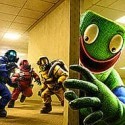







What actually happens if you never pick up anything past the feather in BLOODMONEY: Requiem? That question comes up constantly in community discussion, because the game never forces escalation, and refusing to engage past the gentlest option produces a genuinely different, quieter experience than the one most players describe online.
A Deliberately Slower Requiem
Compared to the original release, Requiem stretches out the gap between unlocking each new object, and longtime fans treat this pacing shift as the defining difference between the two versions. Where the earlier game let players blow through its full object list in one sitting, Requiem is built around forcing a pause after nearly every escalation, which several players openly describe as making the guilt land harder rather than softer.
This slower rhythm is not universally loved. A recurring criticism in comment sections is that the middle stretch of a run can feel repetitive before the next tier of objects becomes available, and the community is split on whether that repetition is an intentional discomfort tactic or simply an unpolished pacing choice in an early build.
Harvey Harvington’s Growing Vocabulary
Harvey Harvington’s dialogue in Requiem has been noticeably expanded compared to earlier community footage, and he now reacts differently depending on how quickly a player escalates rather than only reacting to the object itself. Players who move slowly report longer, more resigned commentary from him, while players who escalate rapidly get shorter, more startled reactions, a distinction the fandom has started documenting almost line by line.
Fourth-wall breaks remain a defining feature. Harvey Harvington occasionally addresses the player directly rather than staying in character, and this specific writing choice is what most reviewers single out when explaining why BLOODMONEY: Requiem feels different from a generic reaction-based clicker.
Tools, Tiers, and the Objects Players Talk About Most
- The feather, treated by the community as the safe, near-mandatory starting tool
- The needle, widely cited as the point where the tone of a run visibly shifts
- Later, unnamed tier objects that players deliberately avoid describing in detail out of respect for newcomers discovering them cold
What New Players Consistently Misjudge
New players tend to assume the payout curve is linear, expecting each new object to add a small, predictable amount of money. In practice the jumps are uneven, and the largest single increase tends to land right around the transition past the needle, which surprises players who were pacing themselves based on the earlier, gentler increments.
Can you finish BLOODMONEY: Requiem using only the feather?
Yes, the game does not force escalation, and staying with the feather produces a complete but noticeably shorter and gentler run, with Harvey Harvington’s dialogue reflecting that restraint directly.
Why do players call this a guilt clicker?
The term comes from the fact that difficulty in BLOODMONEY: Requiem is entirely self-imposed; nothing blocks faster escalation, so any discomfort a player feels is a direct result of their own pacing choices rather than an external obstacle.
Does Harvey Harvington’s dialogue actually change based on how you play?
Yes, his reactions differ based on both which objects are used and how quickly a player escalates through them, which is why community discussion frequently compares specific lines rather than treating the dialogue as static.
Whatever pace a player settles into, BLOODMONEY: Requiem keeps circling back to Harvey Harvington’s reactions as the actual measure of a run, and that focus on a single responsive character is what keeps the guilt-clicker label sticking long after the session ends.
Comments
There are no reviews yet. Be the first one to write one.